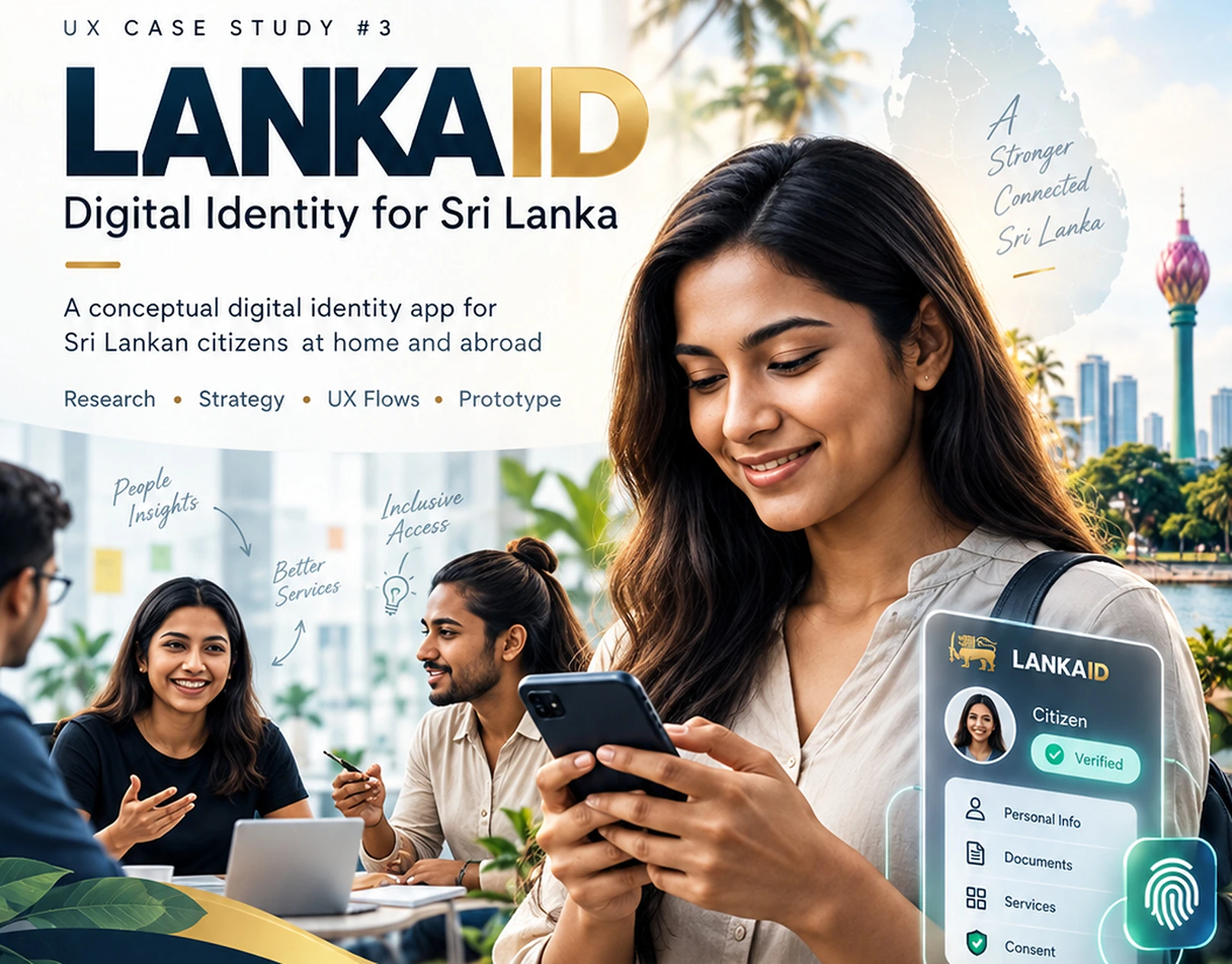
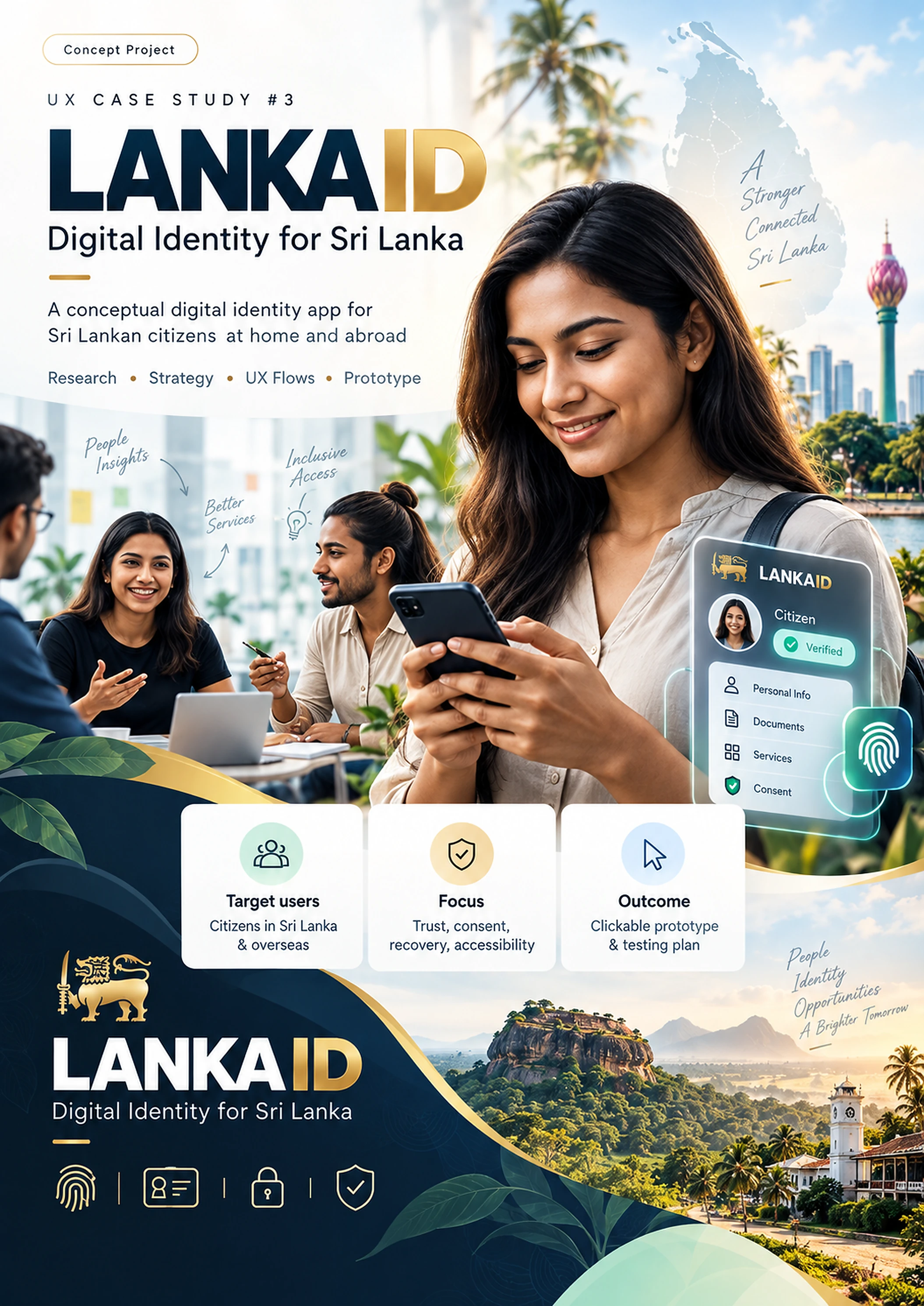
01 / 10 · Project overview
LankaID · Digital identity for Sri Lanka.
LankaID is an independent conceptual mobile experience for Sri Lankan citizens at home and overseas. The project explores how people could access services, review identity requests, control the information they share and recover access safely. My scope covers public-source research synthesis, interaction design, information architecture, UI design and Figma prototyping. Tools used: Figma and ChatGPT for AI-assisted imagery and content exploration.
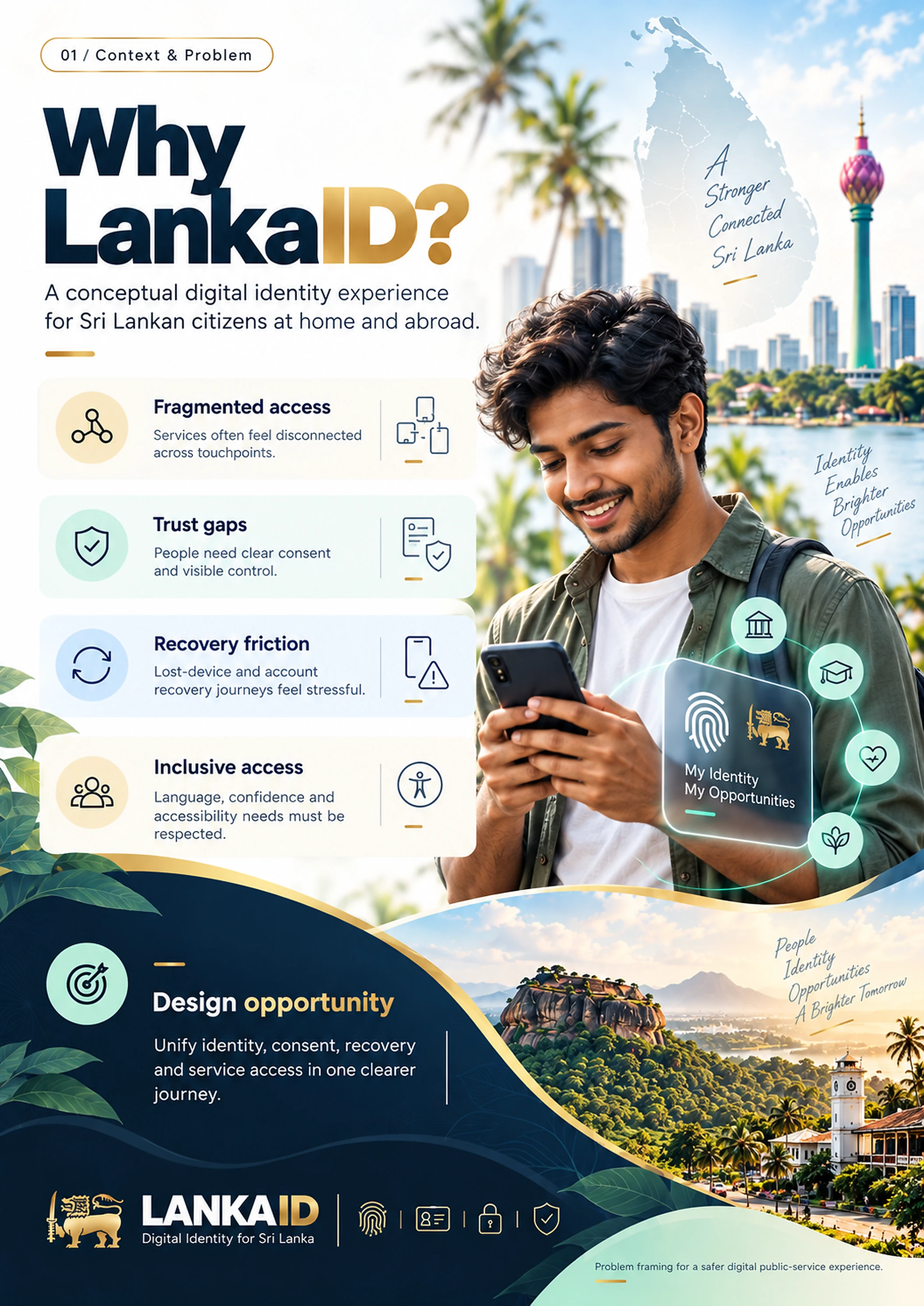
02 / 10 · Context & problem
One identity experience across fragmented journeys.
The problem framing centres on fragmented access, uncertainty about genuine requests, recovery friction and different levels of digital confidence. A person should be able to recognise who is requesting information, understand what is needed and find the next step. The design opportunity is a connected experience for identity, consent, service access and recovery, including use from outside Sri Lanka.
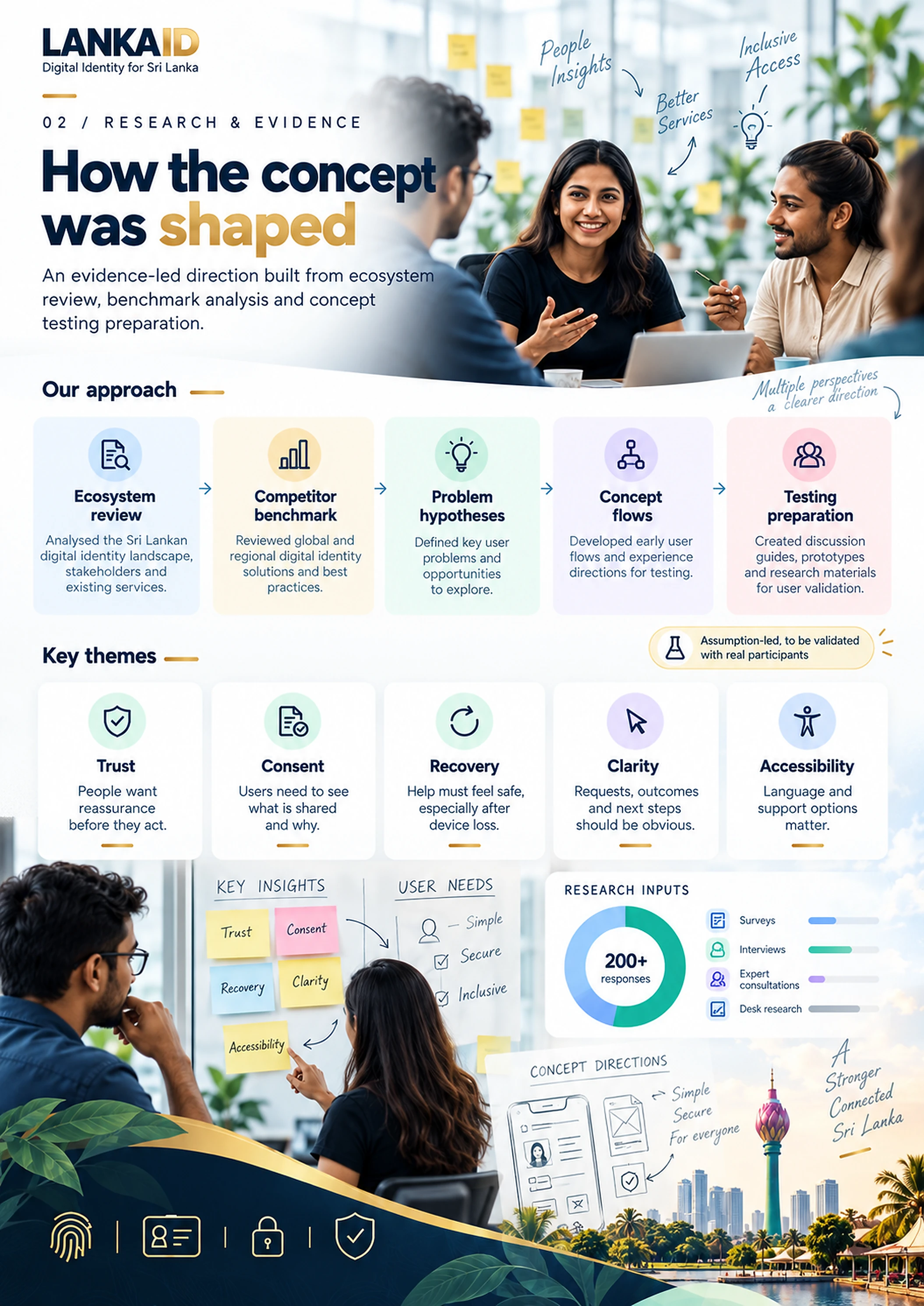
03 / 10 · Research & evidence
Learn from existing services, then test local assumptions.
Public-source research and comparative UX analysis of UAE PASS, Singpass and DigiLocker informed the direction. The process combines ecosystem review, benchmark comparison, problem hypotheses, concept flows and preparation for testing. It asks how citizens recognise genuine requests, understand consent scope and recover a lost trusted device abroad. The 200+ survey-response figure in the artwork is unsupported and is not claimed as completed research; no participant usability study has been completed.
04 / 10 · Personas & empathy
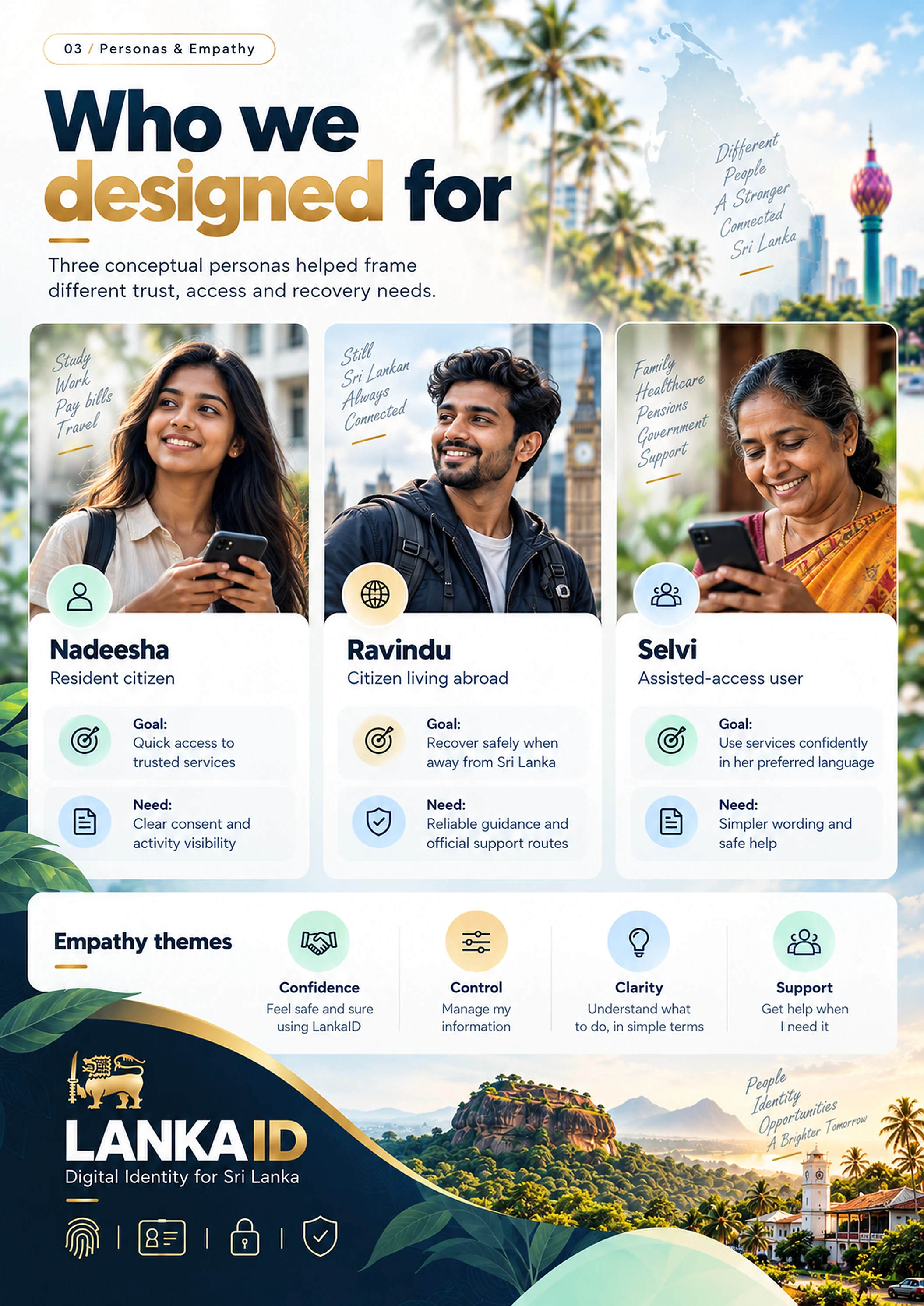
Design for residents, citizens abroad and assisted access.
Conceptual personas represent three contexts: a resident seeking convenient services, a citizen abroad who needs a reliable recovery path, and someone who benefits from simpler language or human assistance. Empathy mapping explores confidence, control, clarity and support. Names and portraits in the visual are illustrative and may differ from the Figma source; these profiles are not actual research participants.
05 / 10 · Critical user journeys
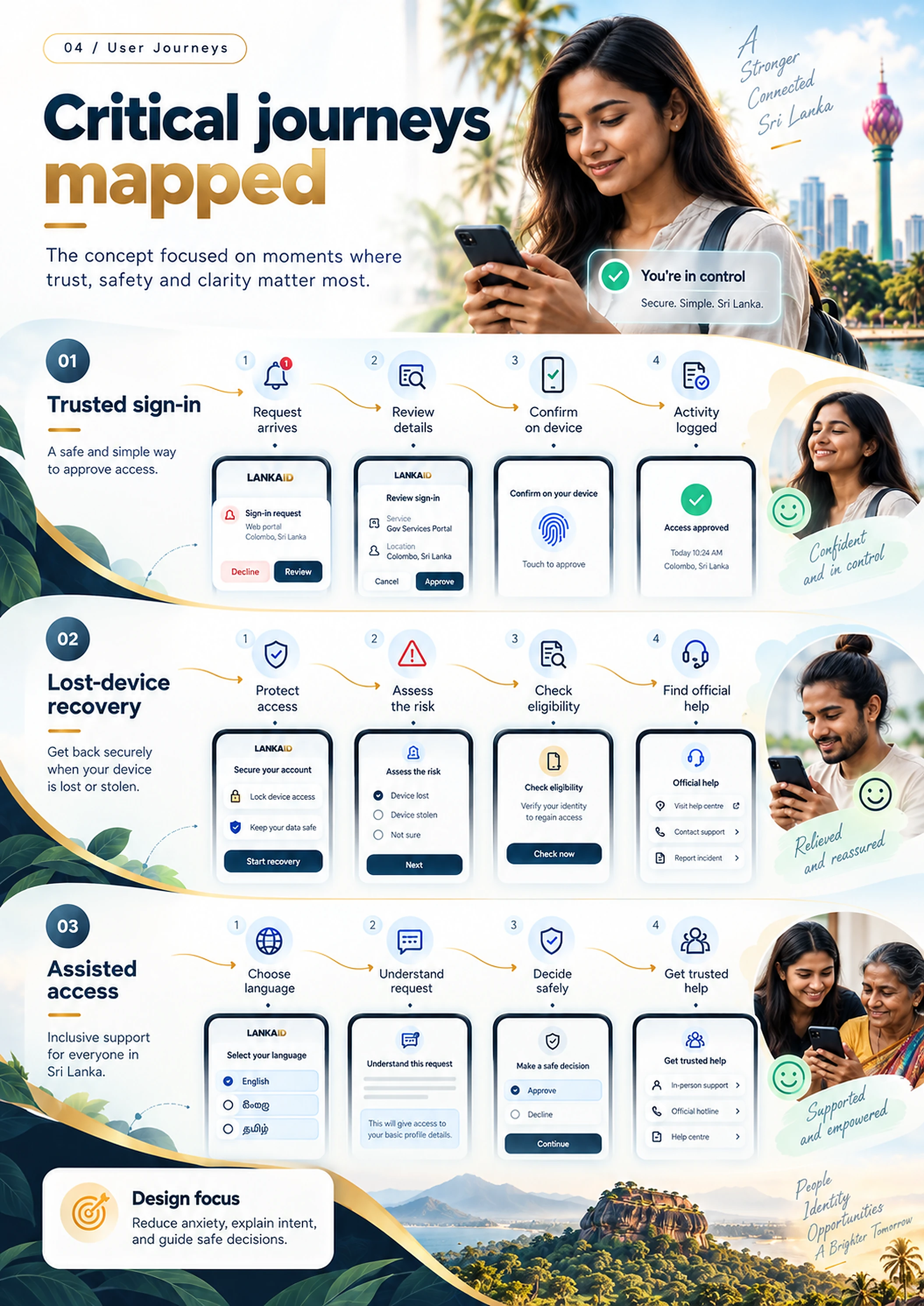
Make trust visible at the moments it matters.
The journey boards explore trusted sign-in, lost-device recovery and assisted access. A sign-in request leads through review, a deliberate decision and visible confirmation. Recovery considers protecting access, establishing evidence and finding an official help route. Assisted access considers language choice, understandable guidance and clear next steps. These are proposed flows, with security and proofing steps dependent on future policy and technical review.
06 / 10 · Information architecture & flows
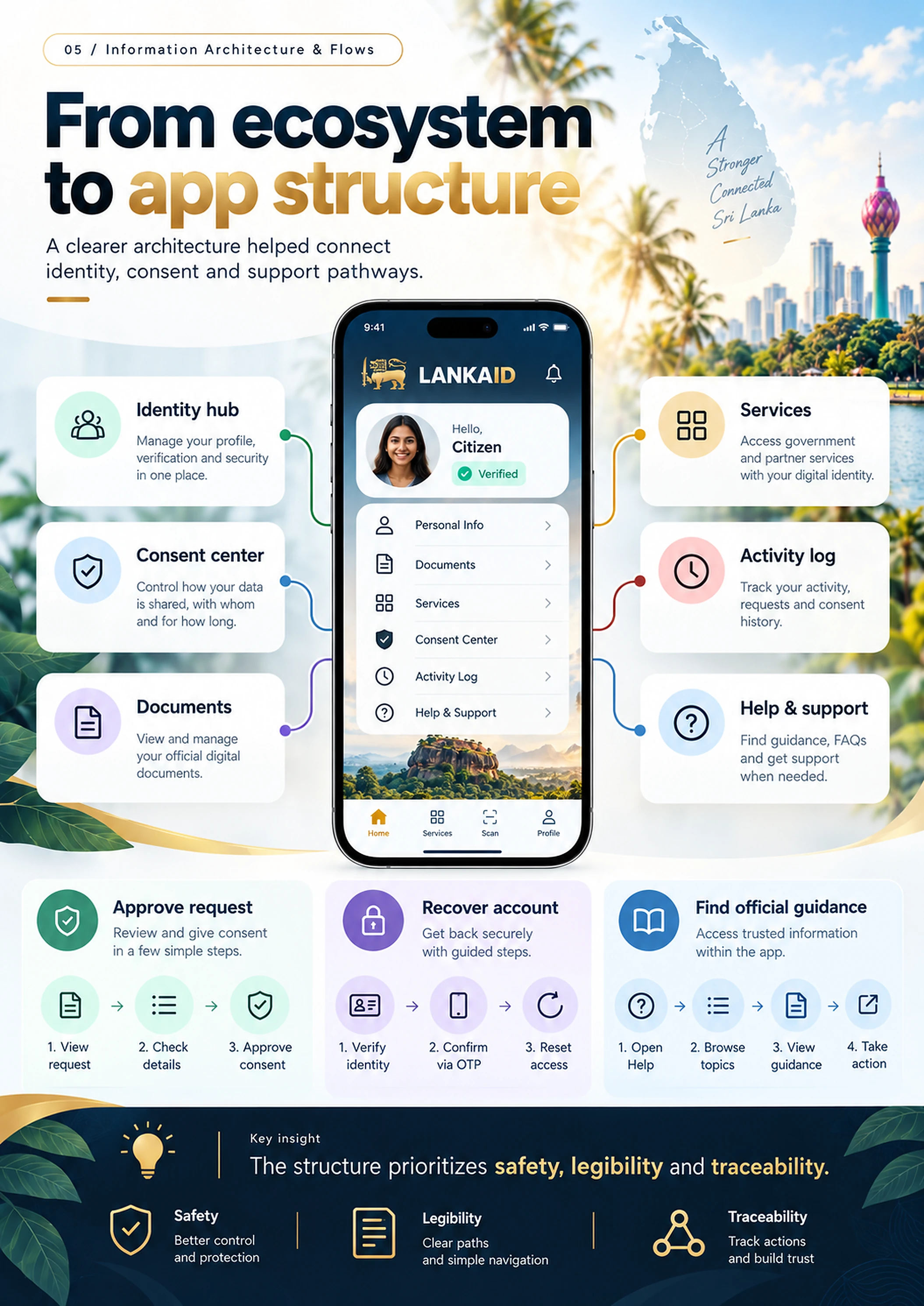
Connect the identity hub, consent, services and support.
The proposed structure groups an identity hub, consent centre, documents, services, activity history and help. A request should show its purpose and information scope before approval. Recent activity makes actions traceable; recovery and official guidance remain discoverable when the usual path fails. The architecture defines conceptual system boundaries rather than established links to government infrastructure.
07 / 10 · Security, privacy & accessibility
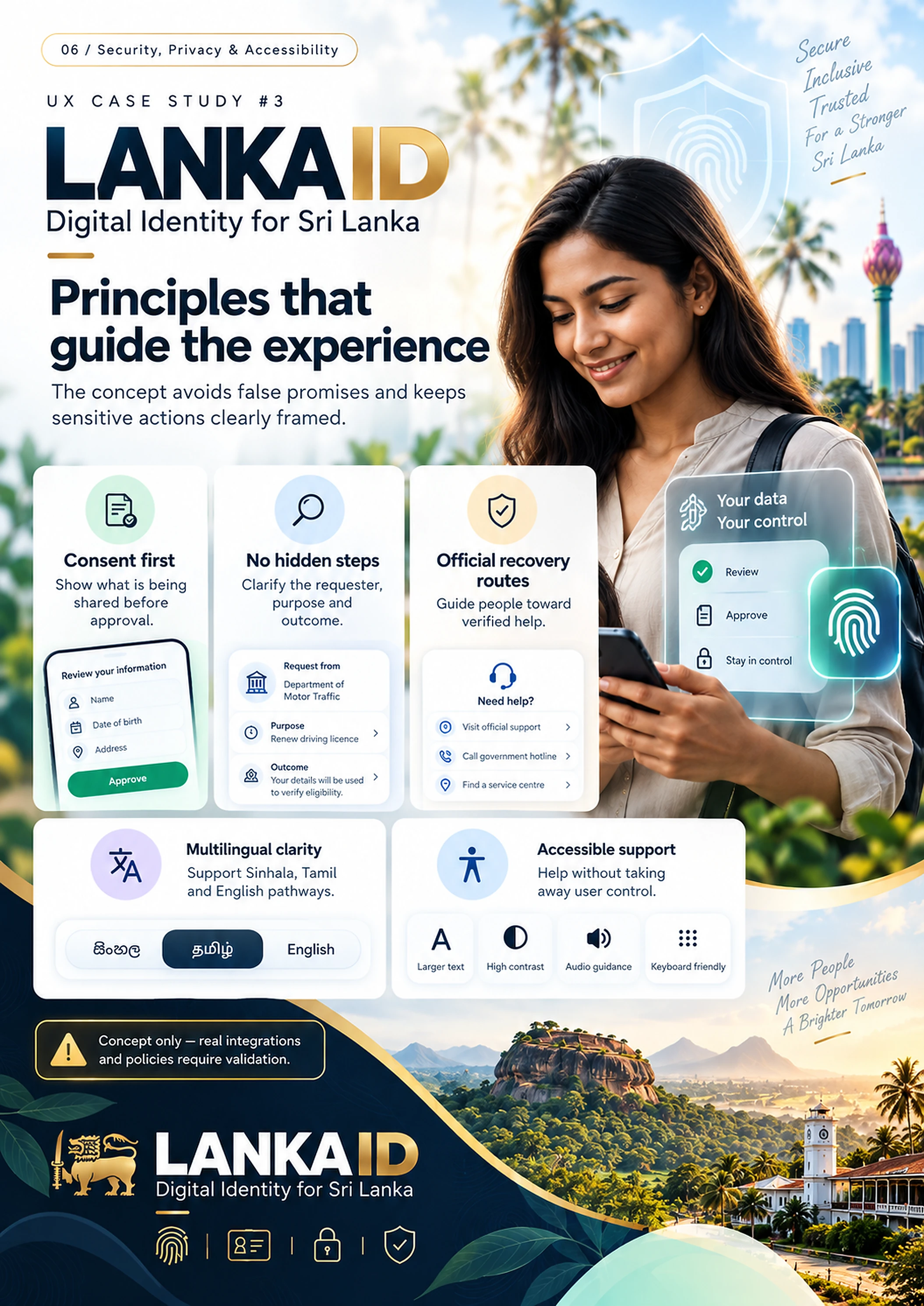
Clear choices, no hidden steps.
The principles are consent first, visible request context and a credible recovery route. People should understand who is asking, what information is requested and the effect of approving or declining. The concept considers Sinhala, Tamil and English, clear language and accessible support. These are design requirements to test; they are not claims of accessibility compliance, legal approval or implemented security controls.
08 / 10 · Opportunity map & MVP
Prioritise consent, recovery, history and inclusive access.
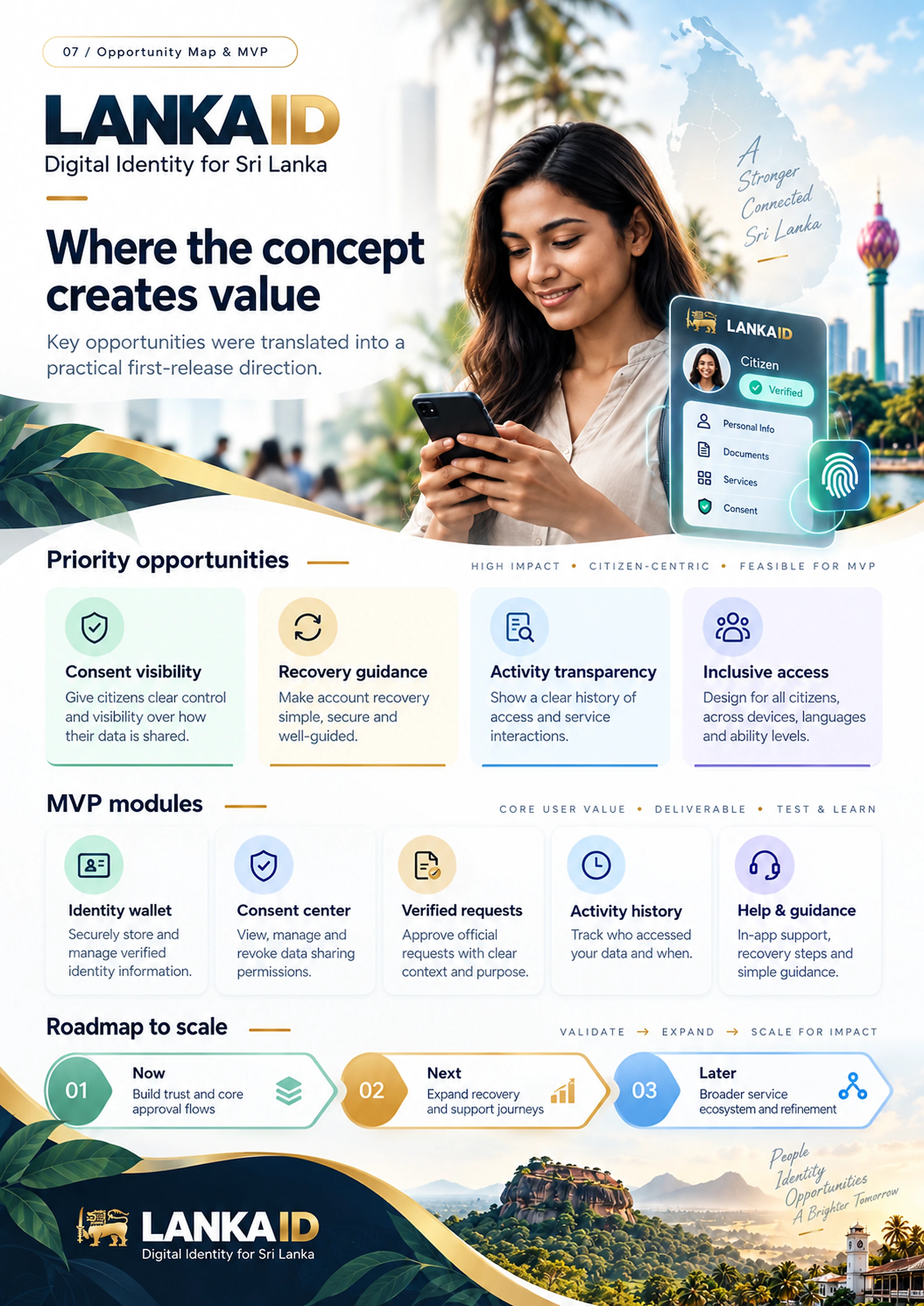
The proposed MVP groups an identity wallet, consent centre, verified-request review, activity history and help. Priority opportunities are clearer consent decisions, recovery guidance, traceability and inclusive access. The roadmap starts with core approval flows, then explores recovery and assisted journeys, followed by broader service expansion as feasibility and user evidence become available.
09 / 10 · Design system & high-fidelity UI
A consistent visual language for sensitive decisions.
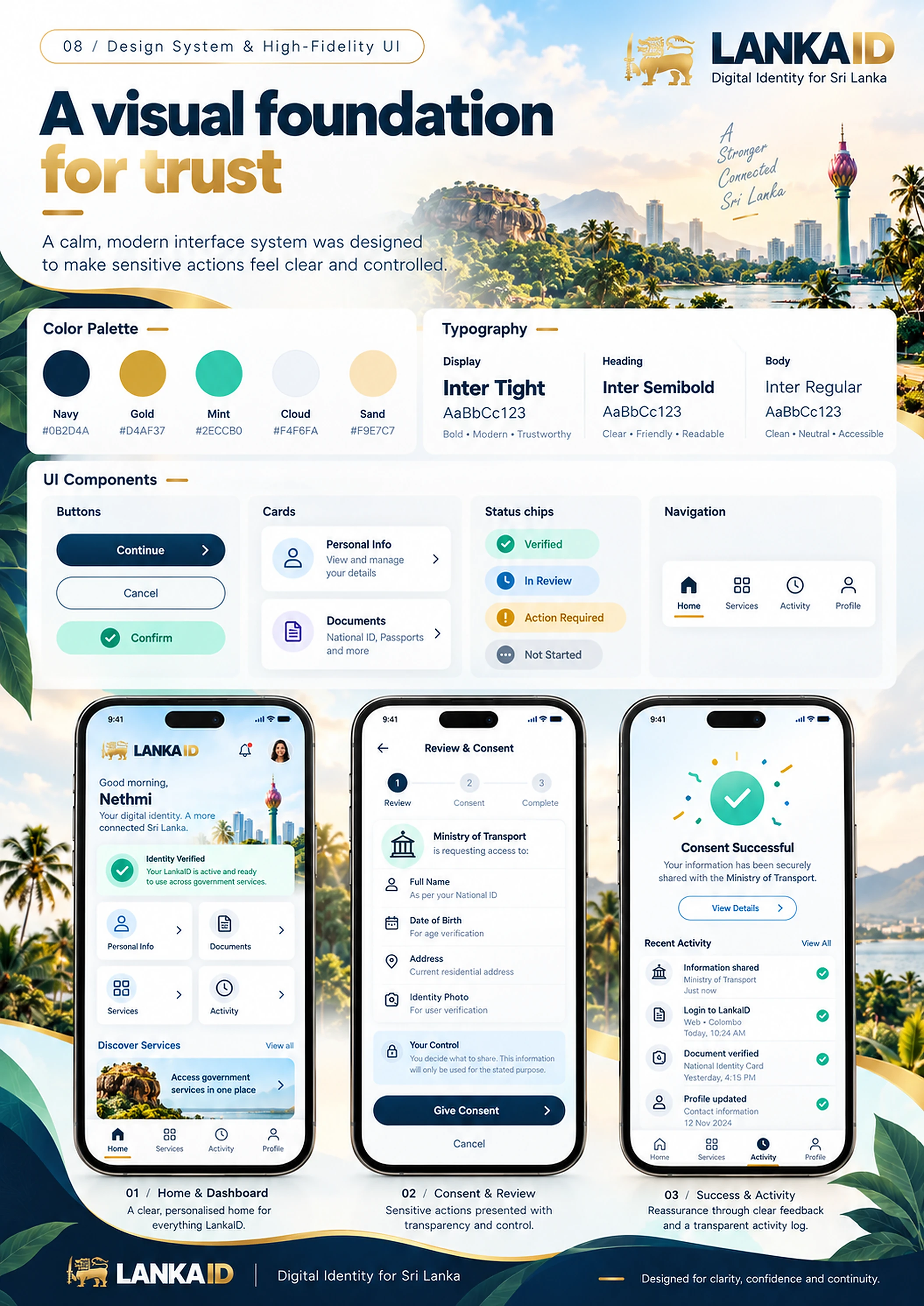
The visual exploration uses a navy foundation with gold, mint, cloud and sand accents, an Inter-based typography direction, and reusable buttons, cards, status badges and navigation. Interface compositions illustrate a home dashboard, request review, confirmation and activity history. These presentation references support the design story; the Figma concept is the source for reviewing the actual prototype and component decisions.
10 / 10 · Prototype & testing plan
Twenty screens. Four core journeys. Validation still ahead.
The Figma concept includes twenty high-fidelity mobile screens across four core journeys, with primary and alternative paths. Proposed tasks include reviewing a sign-in request, declining a suspicious request, handling an expired request, recovering a phone abroad, finding official guidance and changing language or seeking help. Moderated sessions should include residents, citizens overseas and people who benefit from assisted access. Record actual comprehension, task completion, errors and confidence before making outcome claims.
Explore the LankaID Figma project ↗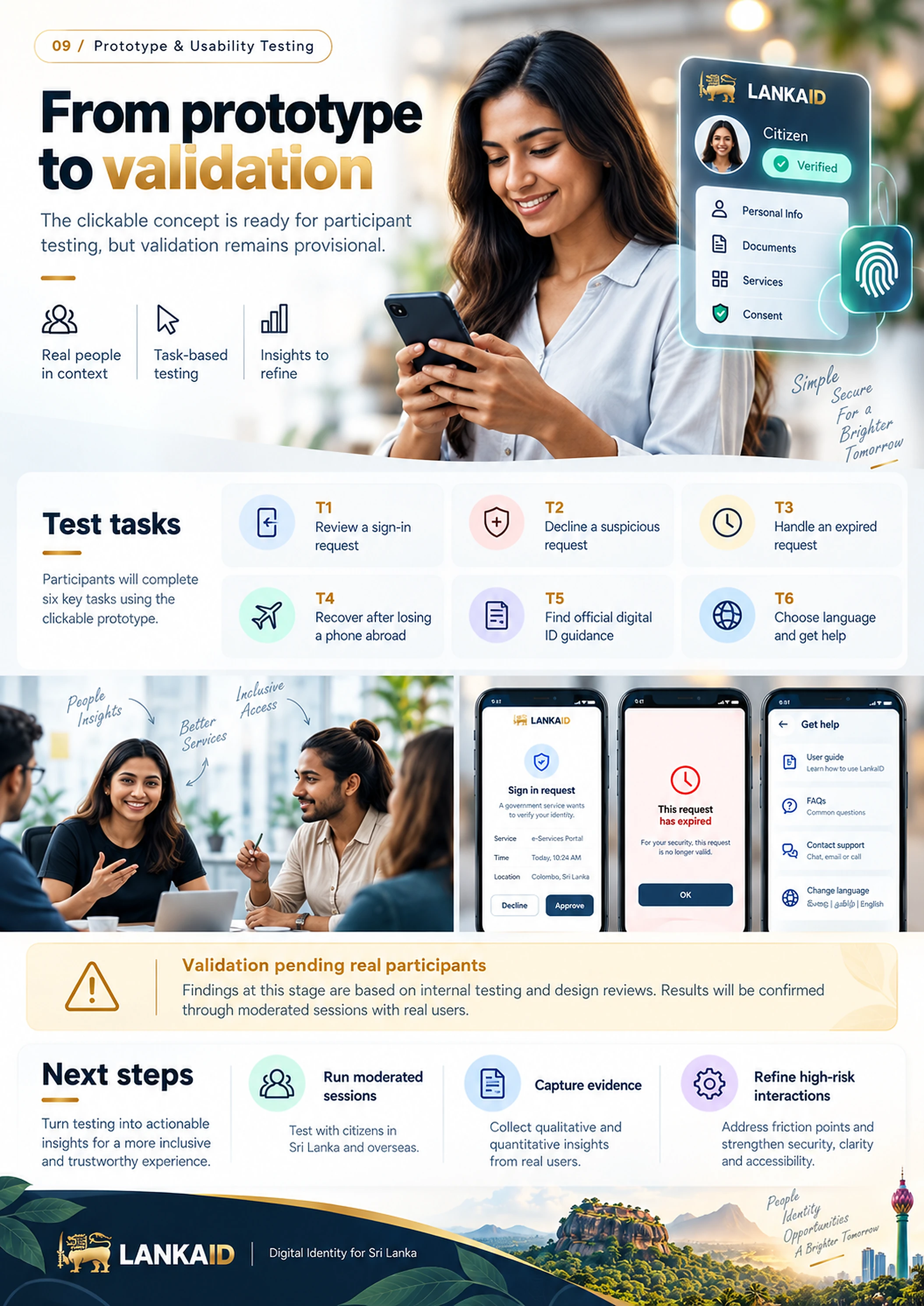
Project status
A completed concept with a clear next step.
The outcome is a research-informed design direction, visual system and clickable prototype. Next steps are moderated task-based testing, accessibility review and expert evaluation of recovery and integration assumptions. LankaID is not affiliated with the Government of Sri Lanka, UAE PASS, Singpass or DigiLocker. Presentation imagery is AI-generated and does not depict research participants.